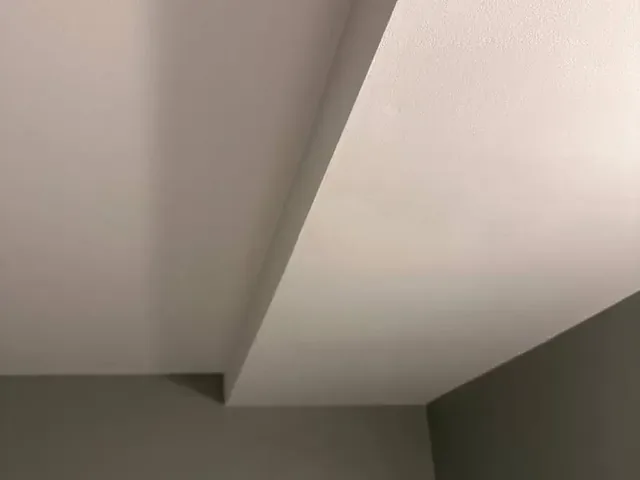
We at Texora Painting & Drywall do drywall installation in Delta, BC, for basement finishing, room additions and new construction. One of the two partners walks the space with you, one of our three uniformed crews handles framing, hanging, taping, mudding, sanding and priming, and the written estimate names your 1, 2 or 3-year workmanship warranty.
Bathrooms and laundry rooms take moisture-resistant green board, and tiled shower and tub surrounds take cement board.
5/8" Type X board goes where the BC Building Code calls for fire-rated assemblies, such as garage-to-house walls.
Like-for-like drywall replacement generally needs no permit; a basement finish, a secondary suite or a fire-separation change needs a City of Delta building permit.
Texora Painting & Drywall is based at 1299 56 St in Tsawwassen, Delta, BC.
Texora Painting & Drywall offers drywall installation across Delta and the Tri-Cities.
Texora Painting & Drywall has been BBB Accredited since 29 September 2026, with an A- rating.
Texora Painting & Drywall is the Quality Business Awards 2026 winner, Best Painters in Delta BC.
One of the two partners walks the space with you, and one of our three uniformed crews handles framing, hanging, taping, mudding, sanding and priming, so your walls are ready for interior paint when we hand them over. Your written estimate names the 1, 2 or 3-year workmanship warranty on qualifying projects. We have been BBB Accredited since 29 September 2026, with an A- rating, and hold 5.0 on Google from 50 reviews.
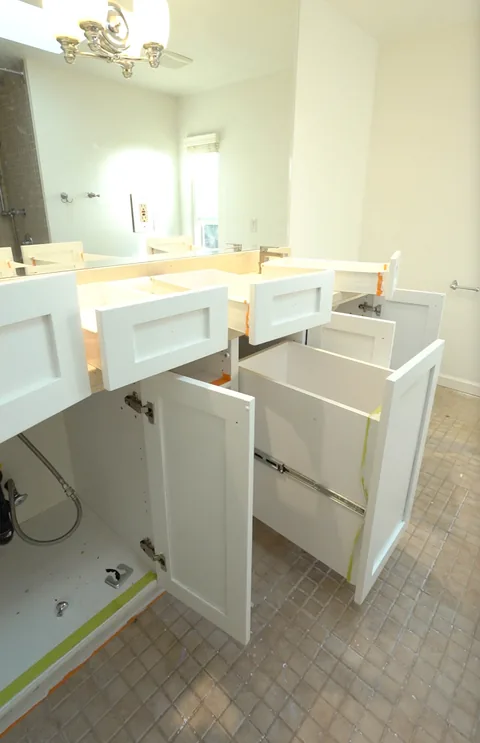
Bathroom walls and trim · Interior paintwork supplied by Texora.
Drywall installation in Delta, BC
Rushed drywall work shows up as banding, ridging, nail pops and visible seams once paint goes on. We're painting and drywall contractors based in Tsawwassen, in the City of Delta, and take on drywall installation in Tsawwassen, Ladner and across Delta.
Jobs run from single rooms needing new drywall after a renovation to full basement developments where hundreds of sheets need to be hung, taped and finished. Every project is primed before we hand it over, leaving your walls ready for interior paint. For work in Ladner, see our drywall installation in Ladner, and for PoCo, see drywall installation in Port Coquitlam. For the concrete floor in a basement, see epoxy flooring.
We are fully insured and WorkSafeBC compliant, and every job starts with a written quote.
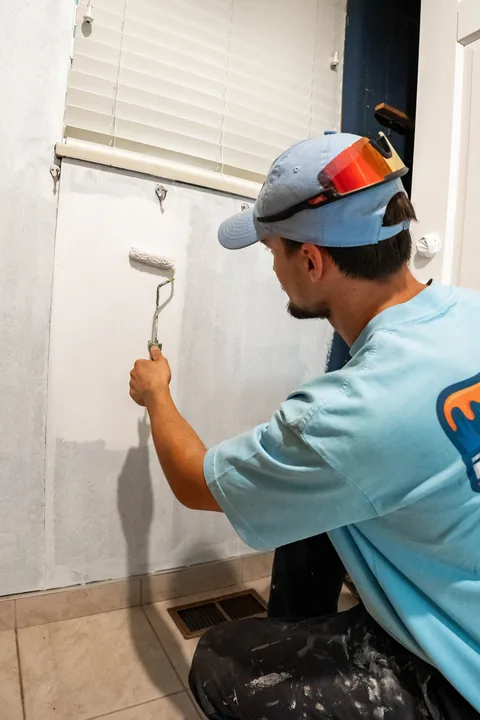
Rolling an interior wall · Interior paintwork supplied by Texora.
Types of drywall we install in Delta homes
Standard 1/2" drywall
The most common type used for interior walls and ceilings throughout BC homes. It's cost-effective and easy to finish, and ideal for most living spaces, bedrooms, hallways, and living rooms.
Moisture-resistant (green board)
Required in bathrooms and laundry rooms in BC, and in other high-humidity areas. The moisture-resistant facing protects against mould and deterioration. Cement board is used behind tile in showers.
5/8" fire-rated Type X
Required by BC Building Code in garage-to-house separations, between suites, and in certain stairwell applications. Thicker, heavier, and provides a full hour of fire resistance at the assembly level.
Soundproofing drywall
Dense or laminated panels (such as QuietRock) reduce sound transmission significantly. Ideal for home theatres, music rooms, suites, and shared walls between bedrooms.
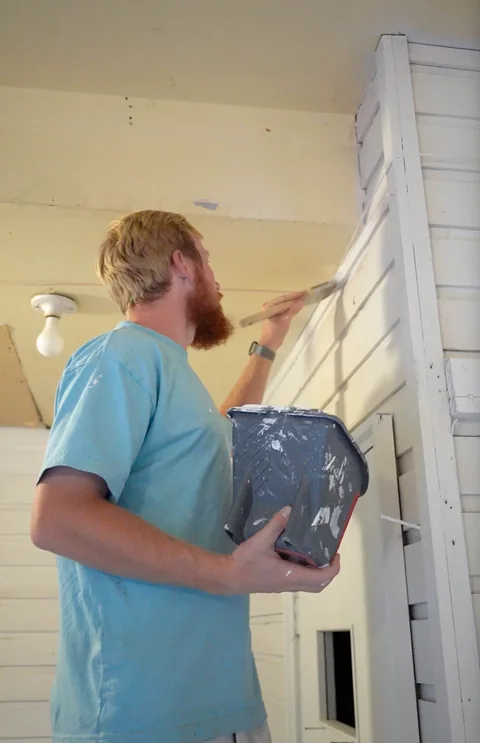
Interior brushwork · Interior paintwork supplied by Texora.
Drywall types at a glance
Board
Where it goes
Why
Standard 1/2" drywall
Interior walls and ceilings throughout BC homes: most living spaces, bedrooms, hallways and living rooms
Cost-effective and easy to finish
Moisture-resistant (green board)
Bathrooms and laundry rooms in BC, and other high-humidity areas; cement board goes behind tile in showers
The moisture-resistant facing protects against mould and deterioration
5/8" fire-rated Type X
Garage-to-house separations, between suites, and certain stairwell applications, where the BC Building Code requires it
Thicker and heavier, with a full hour of fire resistance at the assembly level
Soundproofing drywall
Home theatres, music rooms, suites, and shared walls between bedrooms
Dense or laminated panels (such as QuietRock) reduce sound transmission significantly
When does a Delta home need new drywall rather than a repair?
New drywall goes in for basement finishing, room additions and new construction, and wherever a renovation leaves a room needing new board. Where existing drywall is extensively damaged, removing it and starting fresh usually gives a better result than hanging a second layer, which adds weight and causes trouble around electrical boxes and door frames.
How a drywall installation runs in Delta
1. Planning and framing review
Before a single sheet goes up, we walk the space and assess the framing. Studs need to be properly spaced (typically 16" on centre), plumb, and free of warps or crowns that would show through the finished wall. If we identify framing issues, we address them before hanging begins, which prevents problems that are expensive to fix later.
2. Hanging the sheets
Drywall sheets are laid out to minimize seam locations and avoid butt joints in high-visibility areas. Sheets are fastened with screws (never nails on ceilings) at the correct spacing to prevent future nail pops.
Ceiling drywall, often 5/8" because it sags less, is hung first, then walls. All electrical boxes, plumbing penetrations, and HVAC openings are cut out cleanly.
3. Corner bead and accessories
Metal or vinyl corner bead is applied to all outside corners to protect them from chips and dings. J-bead and L-bead trim raw drywall edges at windows, doors, and transitions. Getting corner bead perfectly straight and plumb at this stage is critical, because it affects the straightness of every corner in the room.
4. Taping and three-coat mudding
Paper or fibreglass tape is embedded in the first (base) coat of joint compound. A second coat extends the mud wider across the seam, and a third finish coat, the thinnest and widest, gets sanded smooth. Each coat must fully dry before the next is applied, and rushing this stage is the most common cause of future cracking and banding.
5. Sanding and priming
Once all mud coats are dry, the surface is sanded smooth, with special attention to feathered edges, screw dimples, and corner bead transitions. The dust is thoroughly cleaned before a PVA primer or drywall primer is applied. Unprimed drywall absorbs paint unevenly and looks blotchy, even with premium paint.
Featured Google reviews
What do Google reviewers say about working with Texora?
Rated 5.0 on Google
Word for word from our Google reviews.
“Absolutely amazing work! The attention to detail and professionalism really stood out, and the final result completely exceeded expectations”
Dominic Brayton, Google review, April 2026
“Quilty work and service. Very nice and exceptional. Really recommended”
Edem Lucas, Google review, April 2026
“They do know what they are doing Highly recommend 🙏🏼”
Arta Manian, Google review, February 2026
“Excellent work. Personable and professional. I am very pleased and recommend their work,”
Barbara Helmer, Google review, September 2026
“Great friendly people easy to work with, I am very pleased with the patch and paint job the did to my bathroom. Looks fresh! Thank you! I will look to them for future projects.”
Taylor Watalla, Google review, September 2026Bathroom patch and paint
“Texora Painting did an excellent job! The finished work looks fantastic, and everything was completed quickly and professionally. I was especially impressed with how thoroughly they cleaned up afterward—they left everything neat and tidy. Great workmanship and service from start to finish. I would definitely recommend them to anyone looking for quality painting and repair work.”
Drywall installation in the Lower Mainland is typically priced per square foot of drywall surface area. For hanging, taping, and finishing combined, expect approximately $2.50–$5.00 per square foot depending on ceiling height, layout complexity, and the level of finish required.
A typical 1,000 sq ft basement development runs $3,500–$6,000 for full drywall work. We provide written quotes before any work begins.
Interior paintwork from Texora jobs
Interior wall painting and bathroom surfaces from Texora’s supplied photos.
Rolling an interior wallBathroom walls and trim
Related drywall services in Delta
Drywall repair
Holes, dents, and damaged sections repaired and texture-matched.
Drywall installation questions from Delta homeowners
Your written estimate sets out the schedule for your Delta project. The drying time between mud coats can't be rushed, since proper drying is what prevents future cracking.
Moisture-resistant drywall, commonly called green board, is required in bathrooms and laundry rooms in BC. For areas that will be tiled (shower surrounds, tub surrounds), cement board is the correct substrate. Standard drywall will absorb moisture in a bathroom environment and deteriorate, leading to mould and structural problems.
It is possible in some situations, for example when adding a layer for soundproofing (dense panels such as QuietRock) or to cover extensively damaged surfaces. However, doubling up drywall adds significant weight, creates issues around electrical boxes and door frames, and is generally not recommended unless there's a specific reason. In most cases, removing the existing drywall and starting fresh produces better results.
5/8" drywall is thicker and heavier than standard 1/2" board, and significantly more rigid. It is required by the BC Building Code in fire-rated assemblies: garage-to-house walls, between secondary suites, and stairwell separations.
On ceilings, 5/8" is often preferred because it sags less over time. The trade-off is that it's heavier and harder to handle, so installation takes more time.
You need to wait for all three coats of joint compound to fully dry, and each coat requires a minimum of 24 hours under good drying conditions. After sanding and dust cleanup, a coat of drywall primer must be applied and allowed to dry before painting.
Each coat dries before the next one, and the written estimate gives the schedule for your job. In Delta's cooler, damper months, drying times may be longer.
Replacing damaged drywall on a like-for-like basis generally does not require a permit. However, if you are finishing a basement, adding a secondary suite, or making changes that affect fire separations or the building structure, a building permit from the City of Delta is required. We can help advise on what your project requires, and we're WorkSafe BC registered.
Most drywall cracks in BC homes fall into two categories: cosmetic and structural. Cosmetic cracks result from seasonal wood movement, as framing lumber expands and contracts with humidity changes, which is common in the Lower Mainland.
Structural ones are caused by foundation movement or settlement. Cracks at the corners of window and door openings are common and usually reflect normal seasonal movement rather than a structural problem.
In BC, drywall installation is typically priced by the square foot of surface area (walls + ceilings). Hanging alone runs approximately $0.80–$1.50/sqft; taping and finishing adds another $1.50–$2.50/sqft; together, a complete hang-tape-finish runs approximately $2.50–$5.00/sqft. Projects with high ceilings, curved walls, complex layouts, or higher finish levels (Level 4 or 5) fall at the upper end of the range.
We work in Ladner and Tsawwassen, across Delta, and in Coquitlam, Port Coquitlam and Port Moody. We are based at 1299 56 St in Tsawwassen, and Highway 17A, 56 Street and Ladner Trunk Road connect Tsawwassen with Ladner Village. In the Tri-Cities, Barnet Highway, Lougheed Highway and Ioco Road connect Port Coquitlam with Port Moody.
The map is provided by Google Maps. Google may receive your IP address and use its own cookies.
Tsawwassen, Delta, BC. Texora Painting & Drywall is based on 56 Street; Ladner is just north.
Get a drywall installation quote in Delta
One of the two partners walks the space and checks the framing with you, and the written estimate names the drywall type, the finish and your 1, 2 or 3-year warranty term.